

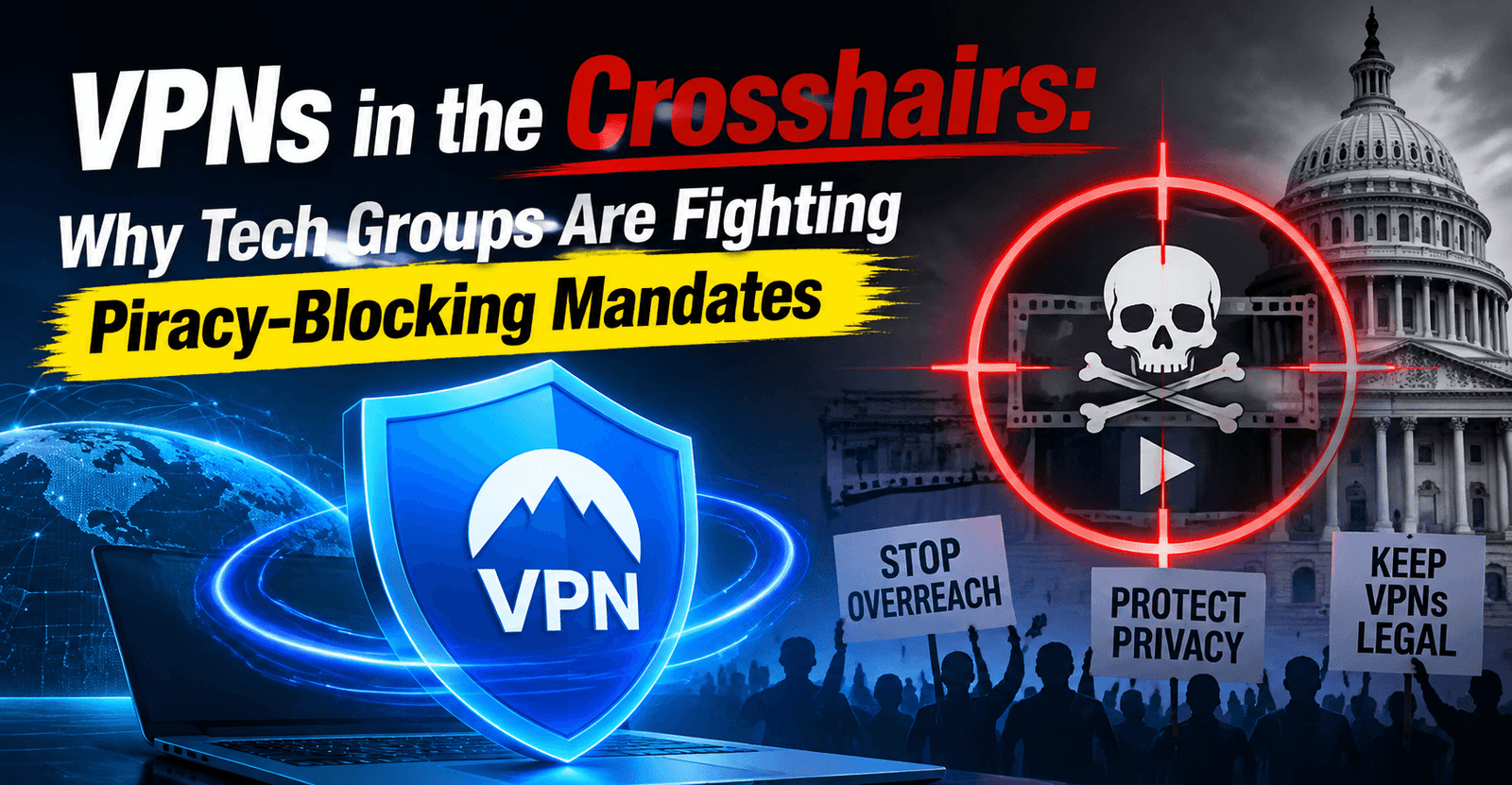
VPNs in the Crosshairs
Policy Watch · VPN Regulation
A proposed U.S. bill and a string of European rulings could turn VPN providers into enforcement tools for copyright holders. Industry groups say that is a mistake.
⚡ Key Takeaways
- The American Copyright Protection Act, introduced by Rep. Darrell Issa, would let courts order ISPs, DNS resolvers and VPNs to block foreign pirate sites.
- The Internet Infrastructure Coalition released a report titled “VPNs at Risk” on Global Encryption Day, arguing that blocking duties would harm privacy and security.
- France and Italy already show how such regimes work in practice, including cases where some VPN providers withdrew servers.
What is on the table
Site blocking has been a favorite tool of rightsholders for years. Traditionally, it targeted internet service providers. More recently, the target list has widened to DNS resolvers, content delivery networks and, now, VPNs. The logic is straightforward from a rightsholder’s perspective: if a VPN lets someone sidestep a block, the block is incomplete.
The proposed American Copyright Protection Act follows that logic. If enacted in its current form, courts could order a range of intermediaries, VPN services included, to stop their users from reaching specified foreign sites. The industry response arrived through the Internet Infrastructure Coalition, whose members include VPN providers, and its “VPNs at Risk” report.
A VPN does not host, store or promote copyrighted material. It carries traffic, and that traffic is overwhelmingly lawful.
Lessons from Europe
France is the cautionary tale most often cited. Courts there have extended blocking orders to include VPN providers, prompting a coalition of VPN companies to argue that content-neutral tools should not be treated as facilitators of piracy. Italy’s Piracy Shield system, meanwhile, has drawn criticism after mistaken blocks hit legitimate services, and its expanded scope has pushed some VPN operators to shut down servers in the country.
Critics of these systems point to a pattern: blunt technical measures tend to overblock, and appeals processes are slow. Supporters respond that creators lose real revenue to piracy and that voluntary measures have not been enough. Both claims can be true at once, which is why the debate is hard to settle with slogans.
| Perspective | Core argument |
|---|---|
| Rightsholders | Blocks must cover circumvention tools or they are easily bypassed |
| VPN industry | Mandates cause overblocking and weaken privacy for lawful users |
| Infrastructure firms | Blocking regimes lack oversight and create collateral damage |
What it means if you use a VPN
Nothing changes today. The bill is a proposal, and no U.S. law currently forces VPNs to block specific sites. But it is worth watching, because mandates could affect server availability, features and pricing in affected regions. If you rely on a VPN for safety while traveling, working remotely or accessing independent news, follow the debate and favor providers that publish clear transparency reports and commit to protecting users.
As always, use a VPN lawfully. Our guides evaluate services for privacy, security and legal recreational use, not for infringing copyright.
This article summarizes public reporting and does not constitute legal advice. Aovory may earn a commission through links on this site.
About the Author
