
Gaming News // Industry Report
Cloud Gaming in 2026: How Streaming Finally Grew Up
By Aovory Team · 8 min read
For nearly a decade, cloud gaming was the technology everyone wanted to believe in and almost nobody could fully trust. Input lag, patchy compression artifacts, and a graveyard of shuttered services turned “game streaming” into a punchline as often as a promise. In 2026, that punchline has quietly become a punch line no more. Cloud gaming has stopped being a novelty bolted onto existing platforms and has become, for a meaningful slice of the player base, simply how they play.
The shift didn’t happen because of one miracle breakthrough. It happened because a handful of stubborn engineering problems finally got solved at roughly the same time, and because the audience that grew up with streaming video and music finally aged into an audience that expects games to work the same way — instantly, anywhere, on whatever screen is closest.
The Latency Wall Finally Cracked
The single biggest obstacle to cloud gaming was never bandwidth — it was latency, and more specifically, the perception of latency. A shooter that feels “floaty” by even 40 milliseconds gets abandoned by competitive players no matter how good the graphics look. Over the past eighteen months, edge-compute expansion has pushed server nodes dramatically closer to population centers, cutting the physical distance data has to travel. Combined with smarter client-side prediction — techniques that guess a player’s next input and quietly correct if the guess is wrong — the “feel” of cloud play has closed much of the gap with local hardware for all but the most latency-sensitive esports titles.
“Players don’t care why something feels responsive. They just notice when it doesn’t. The moment cloud stopped feeling like cloud is the moment it started winning.” — a common refrain among platform engineers this year.
Devices No One Expected to Become Gaming Rigs
The real growth story of 2026 isn’t happening on dedicated consoles or gaming PCs — it’s happening on devices that were never designed for games at all. Smart TVs with built-in streaming clients, budget tablets, and even some car infotainment systems now ship with cloud gaming apps pre-installed. This matters enormously for accessibility: a $50 million AAA title and a browser tab now cost the player roughly the same amount of local hardware investment — none.
- Smart TVs have become the fastest-growing cloud gaming surface, turning living rooms into consoles without a console.
- Mid-range laptops that would choke on modern AAA titles locally now run them flawlessly through a browser.
- Airline and transit connectivity improvements have made in-transit cloud sessions a genuinely viable way to play, not just a party trick.
Subscription Fatigue Meets a New Bundling Playbook
It would be dishonest to paint 2026 as an unambiguous win. Players are tired of subscriptions — streaming video taught them that lesson first, and gaming is now relearning it. The services that are thriving this year are the ones that stopped treating cloud access as a standalone product and started bundling it into something players already pay for: broadband plans, mobile carrier tiers, and existing entertainment subscriptions. The pitch has shifted from “pay us for the privilege of streaming games” to “you already pay for this, and now games are just included.”
Fast Facts: Cloud Gaming’s New Reality
| Primary growth driver | Bundled access, not standalone subscriptions |
| Fastest-growing device category | Smart TVs & set-top boxes |
| Biggest remaining weakness | Competitive/esports-grade latency |
| Biggest surprise winner | Casual and family co-op genres |
Genres That Actually Benefit From Streaming
It’s telling which genres have embraced cloud delivery fastest. Turn-based strategy, narrative adventures, cozy simulation games, and party-style co-op titles have found an especially comfortable home in the cloud, because their pacing tolerates the occasional micro-stutter far better than a twitch shooter does. Developers building for this space have started designing with cloud delivery in mind from day one — favoring UI clarity over pixel-perfect reaction windows, and building in generous input buffers that quietly absorb network hiccups without the player ever noticing.
This has created an interesting split in the industry: a growing category of “cloud-native” games built explicitly to shine on streaming infrastructure, sitting alongside traditional titles that are merely tolerated on cloud platforms as a secondary option. Expect that distinction to sharpen over the next year, as studios start marketing “built for streaming” as a selling point in its own right.
What This Means for Competitive Gaming
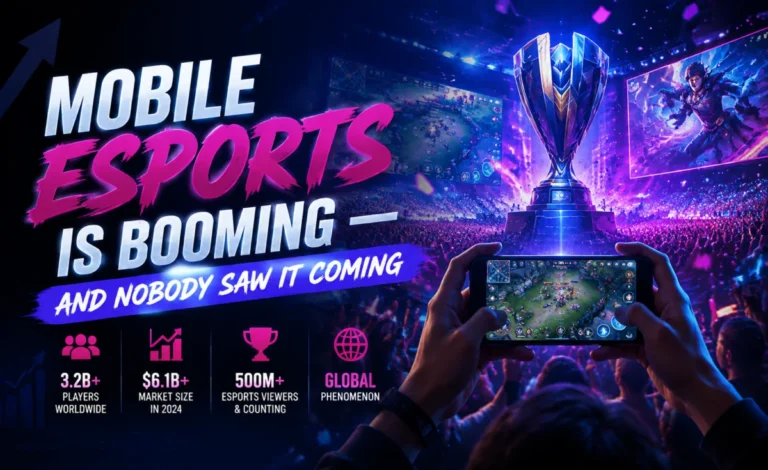
Esports remains the holdout. Tournament organizers are still overwhelmingly local-hardware-only, and that isn’t likely to change soon — the margin for error at the highest competitive level is simply too thin for even a marginal latency improvement to erase. But there’s a growing middle tier: ranked ladders and semi-competitive play where cloud gaming’s convenience now outweighs its residual latency cost for the vast majority of players who aren’t chasing a professional career.
The gap between “good enough for ranked” and “good enough for a world championship” is where cloud gaming’s next battle will be fought.
The Ownership Question Nobody Wants to Answer
Perhaps the thorniest unresolved issue in 2026’s cloud gaming boom is ownership. When a game exists only as a stream, what exactly has the player bought? Platform shutdowns in past years left players with nothing to show for years of playtime and purchases, and that memory hasn’t faded. Some services have responded with hybrid models — local downloads for owned titles, cloud-only access for subscription catalogs — as a way of hedging against the trust deficit. Whether this compromise satisfies players long-term, or simply delays a reckoning, remains an open question heading into next year.
Regional Divides Are Widening, Not Closing
Cloud gaming’s promise was always “play anywhere,” but infrastructure realities mean the experience varies wildly by region. Dense urban markets with strong fiber and 5G coverage are seeing console-quality streaming today. Rural and developing-market users, by contrast, often face the exact latency and compression problems that plagued the technology five years ago. This uneven rollout risks creating a new kind of digital divide — one measured not in who can afford a console, but in who lives close enough to a server.
Looking Ahead
The next twelve months will likely be less about dramatic new features and more about consolidation — fewer platforms, deeper bundling, and a continued narrowing of the latency gap for everything short of top-tier esports. The services still standing a year from now will be the ones that stopped competing on catalog size and started competing on the thing that actually matters to players: does it just work, the instant you press play?
The Bottom Line
Cloud gaming in 2026 isn’t the console-killer it was once hyped to be — but it has quietly become the default way a growing number of people play, especially on devices that were never meant to be gaming machines at all. The revolution wasn’t a single breakthrough. It was a thousand small fixes finally adding up.
About the Author