
Gaming News // Esports
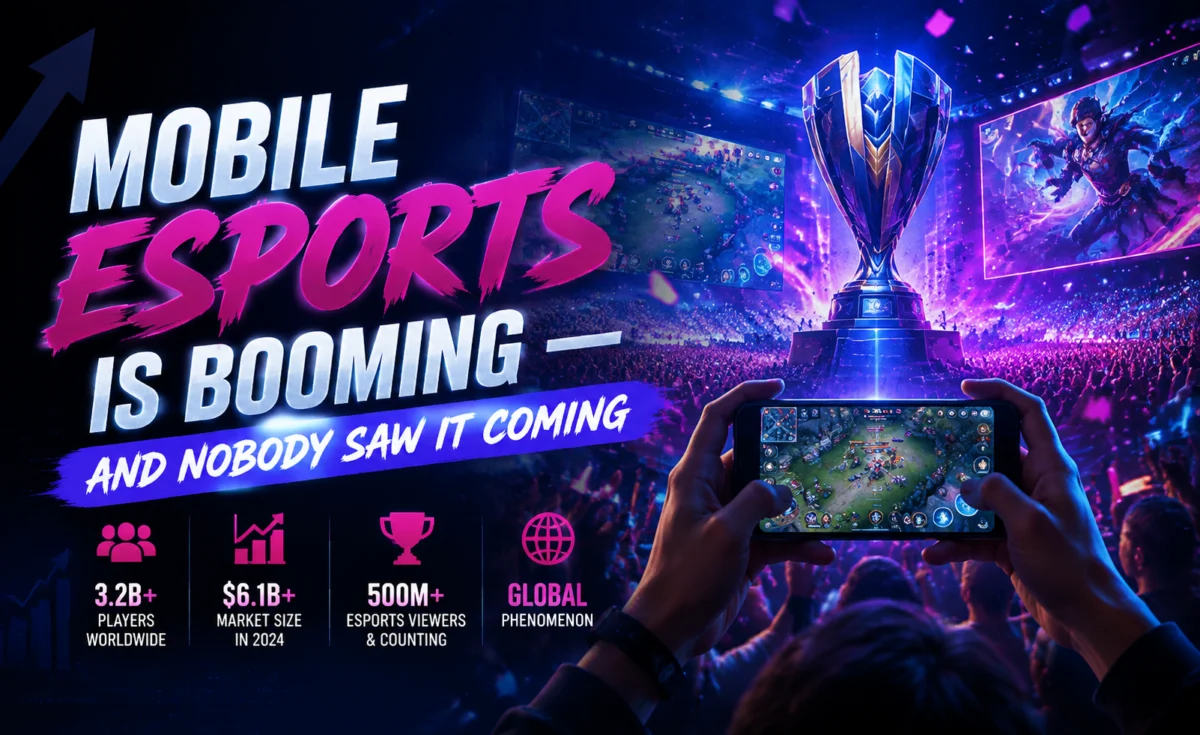
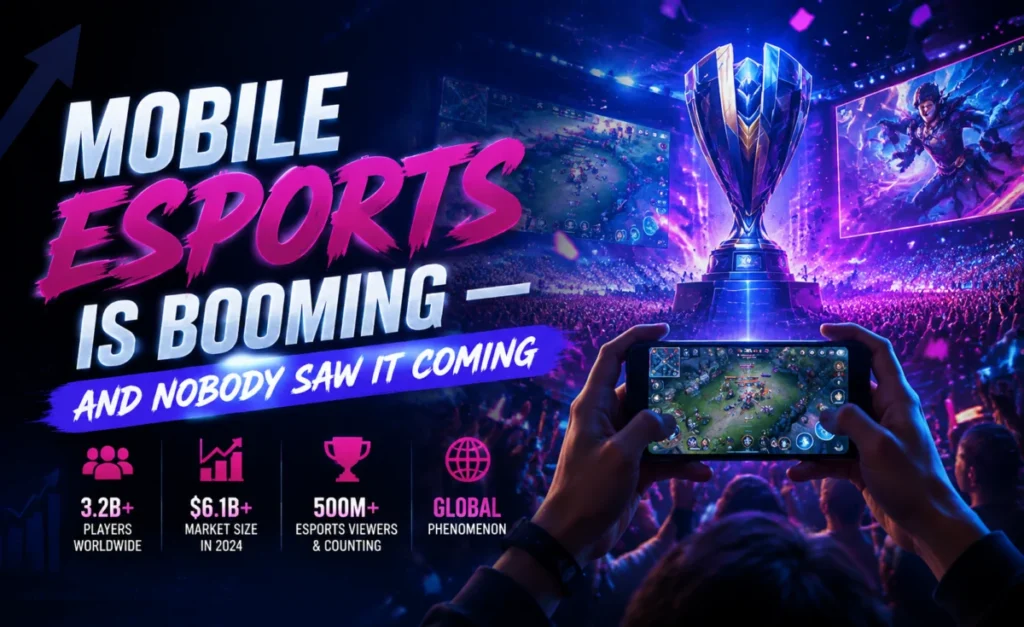
Mobile Esports Is Booming — And Nobody Saw It Coming
By Aovory Team · 8 min read
For years, the phrase “mobile esports” got a polite, condescending nod from the PC and console competitive scene — a “sure, that’s cute” acknowledgment before the conversation moved on to whatever was happening on the big stages. That condescension is aging badly. Mobile competitive gaming has quietly built an audience, a prize pool ecosystem, and a professional infrastructure that now rivals — and in some markets outright surpasses — its PC counterpart.
The Audience Was Always There
The mistake the traditional esports world made wasn’t ignoring mobile players — it was assuming mobile gaming meant casual gaming. That assumption never matched reality in the regions where smartphones, not PCs or consoles, are the primary gaming device for a majority of the population. In those markets, competitive mobile titles aren’t a lesser alternative to “real” esports; they are the only esports scene most players have ever known, and it’s a scene with genuine depth, genuine skill ceilings, and genuine stars.
What’s changed this year isn’t the size of that audience — it’s the willingness of sponsors, broadcasters, and traditional esports organizations to finally take it seriously as a primary market rather than a side bet.
Mobile esports didn’t arrive late. The rest of the industry just noticed late.
Why Mobile Competitive Play Actually Works
Skeptics have long argued that touchscreen controls are too imprecise for serious competition. That argument hasn’t aged well either. A generation of players has now grown up exclusively on touch controls, developing techniques — multi-finger claw grips, custom sensitivity curves, specialized attachable controllers — that would look completely alien to a controller or mouse-and-keyboard player but that produce results every bit as mechanically demanding.
- Lower barrier to entry: a smartphone someone already owns is a far smaller ask than a dedicated gaming PC or console.
- Shorter match formats that fit into commutes and breaks have proven surprisingly compatible with spectator attention spans too.
- A built-in streaming culture — mobile players grew up broadcasting from the same device they play on, collapsing the line between playing and performing.
The Infrastructure Has Finally Caught Up
What separates a genuine esports scene from a large playerbase is infrastructure: leagues with real structure, tournament organizers who understand the format, broadcast production that makes matches watchable, and a path for talented amateurs to go pro. Mobile competitive gaming spent years without much of that scaffolding, relying instead on informal community tournaments and ad hoc streaming setups. This year marks a visible turning point, with dedicated mobile-first leagues adopting the same production values, sponsorship structures, and player development pipelines that took PC esports over a decade to build.
Fast Facts: Mobile Esports’ Rise
| Strongest regional markets | Southeast Asia, South Asia, Latin America |
| Dominant genres | MOBAs & battle royales |
| Biggest structural gain this year | Formalized league infrastructure |
| Lingering weak spot | Western mainstream media coverage |
The Coverage Gap Is the Real Story
Here’s the disconnect worth paying attention to: mobile esports viewership and participation numbers, in the markets where these games dominate, are genuinely enormous — comparable to, and in some cases exceeding, the biggest PC titles’ global audiences. Yet Western gaming media coverage remains disproportionately focused on PC and console competitive scenes. That gap isn’t a reflection of where the audience actually is; it’s a reflection of where the people writing about esports grew up playing. As that generational and geographic bias fades, expect mainstream coverage to catch up rapidly to where the numbers already are.
The biggest esports scenes in the world right now might not be the ones most Western fans have heard of.
Sponsorship Money Is Following the Eyeballs
Brand sponsors have historically chased whichever esports scene had the most Western media visibility, but that logic is starting to break down as marketing teams look directly at engagement data rather than press coverage. Sponsors focused on emerging markets, telecom and device brands in particular, have been quick to recognize that a mobile esports audience is often a more direct match for their actual customer base than a PC-focused audience ever was. Expect sponsorship dollars to keep migrating toward mobile competitive gaming faster than editorial coverage does.
What Traditional Esports Orgs Are Learning
Established esports organizations that built their reputation on PC titles are now scrambling to build or acquire mobile rosters, and the transition hasn’t always been smooth. Mobile competitive culture has its own conventions, its own community norms, and its own star-making mechanisms that don’t simply transplant from PC scenes. Organizations that treat their mobile division as an afterthought bolted onto an existing PC-first structure have largely struggled; the ones succeeding are treating mobile as its own discipline, with its own dedicated coaching staff, analysts, and content strategy.
Where This Goes Next
The next frontier isn’t proving mobile esports can draw an audience — that argument is essentially settled. It’s building the kind of cross-regional recognition and prestige that lets a mobile esports champion be discussed in the same breath as champions from any other platform, without an implicit asterisk. That’s a cultural shift as much as a business one, and it’s likely to take longer than the infrastructure buildout that’s already well underway.
The Bottom Line
Mobile esports isn’t an emerging scene anymore — it’s an already-massive scene that the rest of the industry is only now starting to properly acknowledge. The audience, the skill, and increasingly the infrastructure were never the missing pieces. Recognition was.
About the Author